Copyright © 2025 Premier Waste Pty Ltd. All rights reserved.
General waste services provided by Premier Waste

General Waste Collection for Businesses

General waste refers to the everyday non-recyclable materials produced across commercial, industrial, retail and educational facilities. Effective general waste management relies on selecting the right bin systems, reliable general waste collection schedules and responsible general waste disposal practices that keep your site safe, compliant and operating efficiently.

Premier Waste delivers reliable and tailored general waste solutions for businesses in Melbourne and Brisbane.

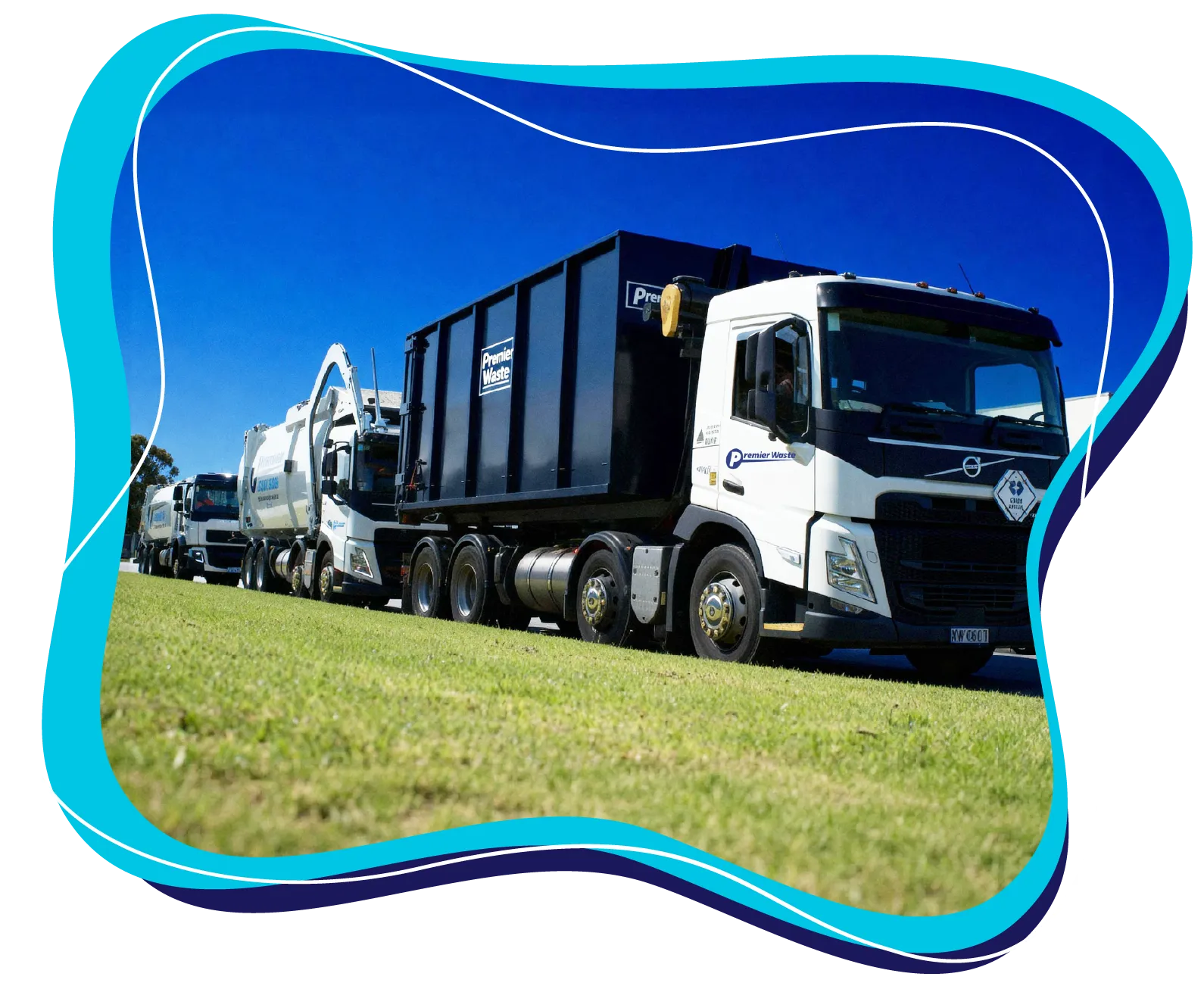
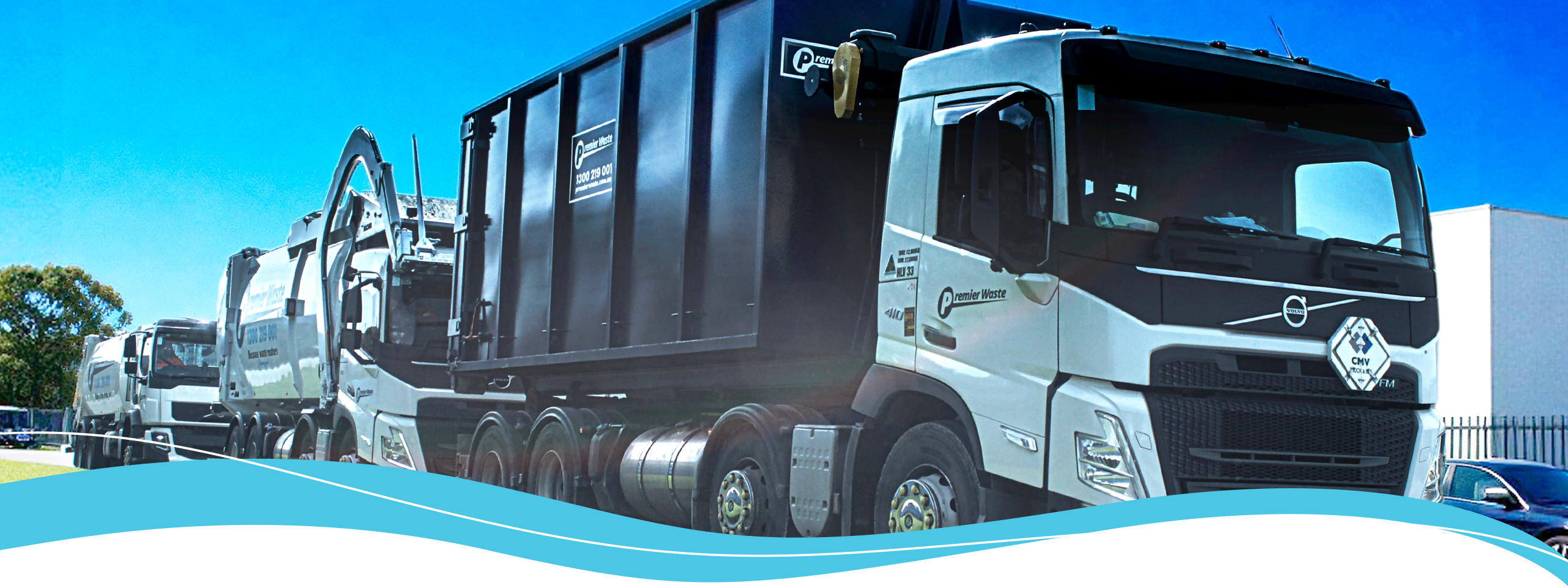
Whether you operate a small retail shop, a multi-level commercial building, a warehouse, a hospitality venue or a large industrial facility, we provide dependable general waste collection services designed to reduce disruptions, manage daily waste volumes and maintain workplace hygiene. Our modern fleet, trained operators and GPS-tracked vehicles ensure every collection is completed safely, efficiently and in full compliance with EPA and environmental requirements.

Some of the general waste services we provide include:

  • Scheduled general waste collection
  • Custom general waste management programs
  • General waste disposal for commercial and industrial sites
  • Multi-site waste consolidation
  • Supply and replacement of general waste bins
  • High-volume general waste removal
  • Compliance-focused waste management planning
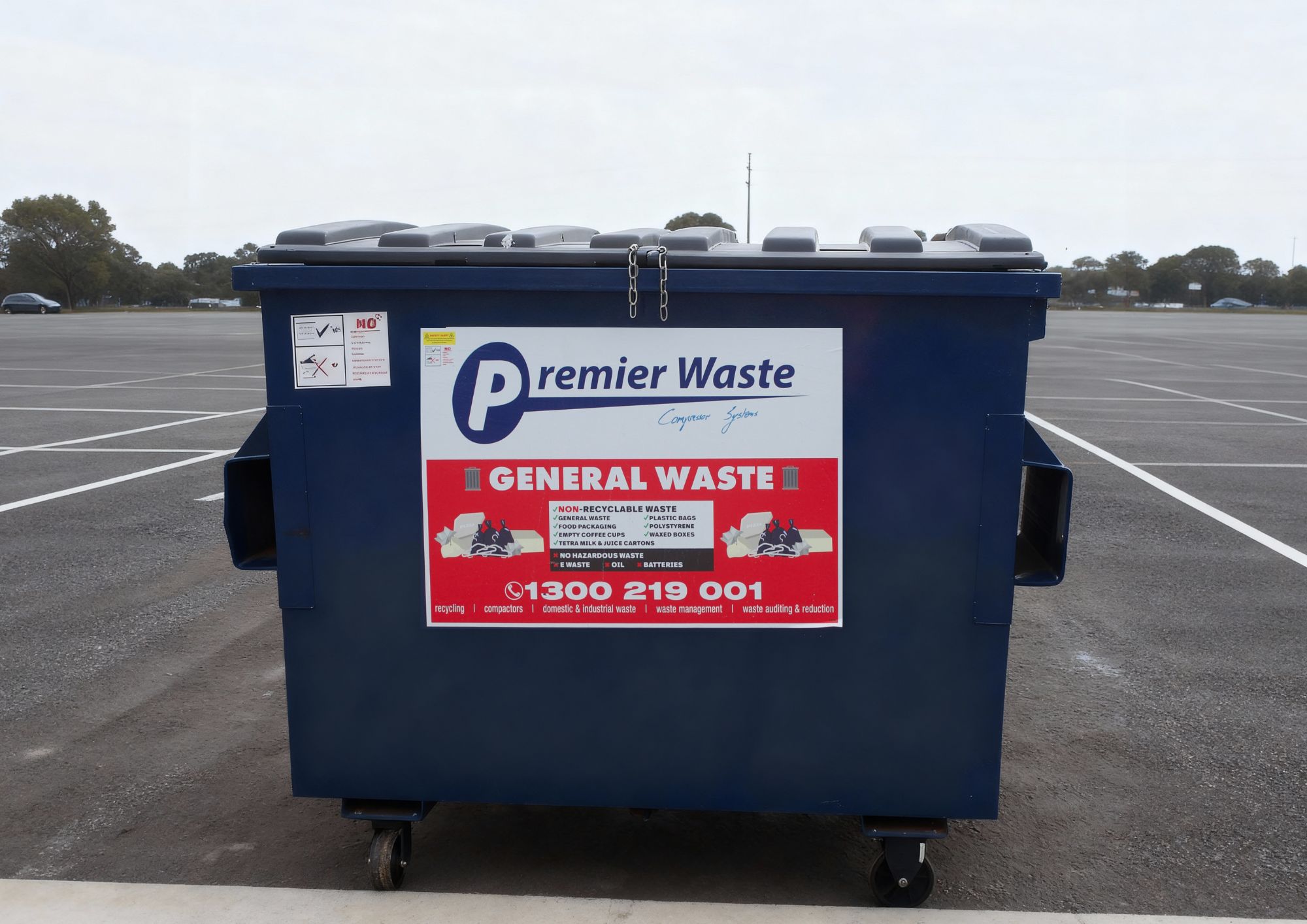
General waste bin used for commercial waste collection by Premier Waste

How General Waste Collection Works

A successful general waste system begins with understanding how your site operates. Our team assesses your daily waste output, access points, service requirements and operational patterns to design a general waste program that suits your business. Once bin sizes and placement are confirmed, collections are scheduled at the frequency you need—daily, weekly or fortnightly.

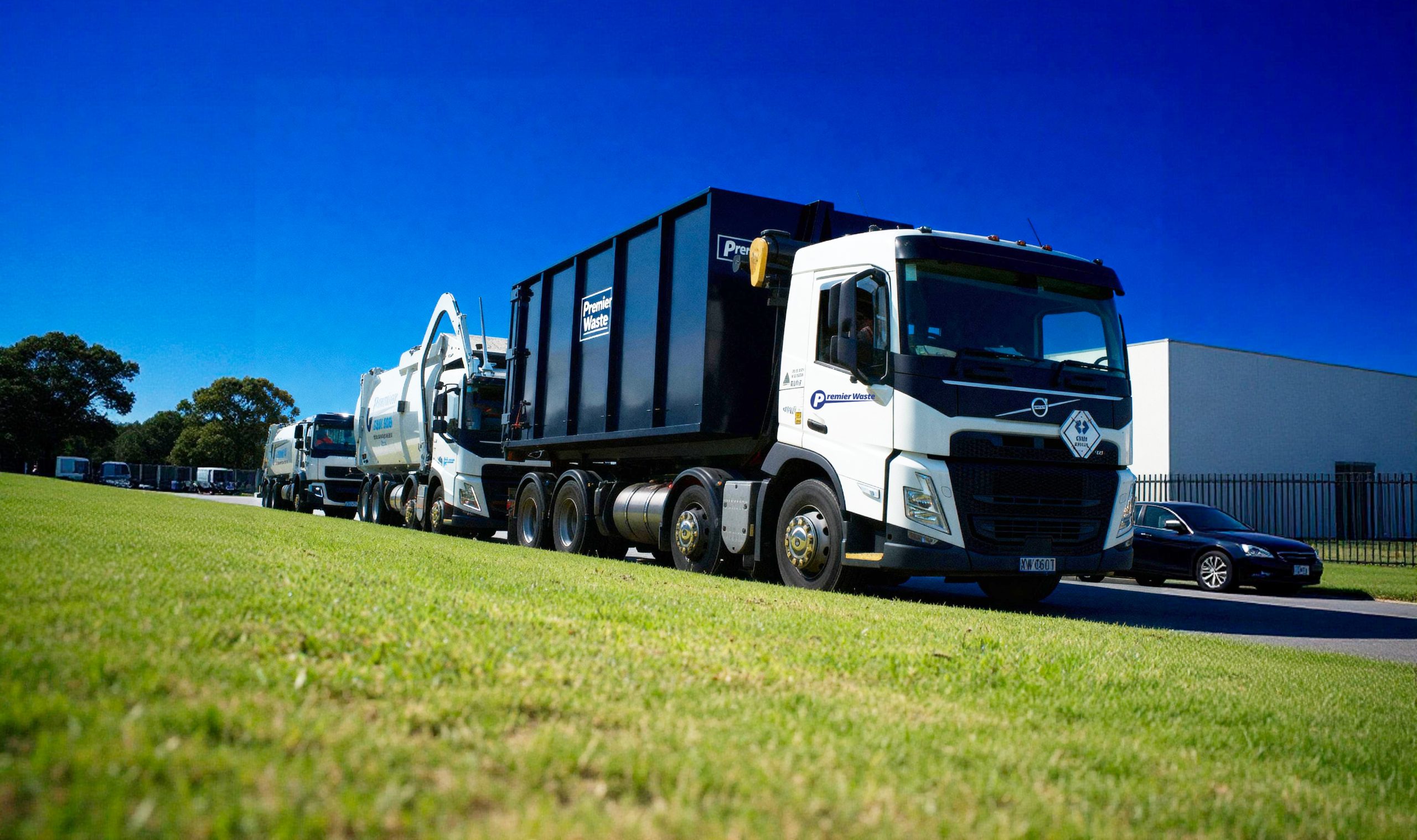
General waste is removed using front-lift or rear-lift vehicles depending on the bin type. Our fleet is equipped with real-time tracking, onboard cameras and automated service verification, ensuring collection accuracy and transparency.

Collected waste is transported to licensed facilities for compliant general waste disposal in accordance with EPA guidelines and council regulations.

Who Uses General Waste Services?

General waste management is required in virtually every industry, but the challenges differ between environments. Businesses that commonly rely on structured general waste programs include:

  • Retail stores with high daily customer traffic
  • Cafés, restaurants and hospitality venues
  • Office buildings with large staff populations
  • Industrial facilities generating mixed waste
  • Schools, aged care facilities, childcare centres and universities
  • Medical and health-related environments (non-clinical waste)
  • Logistics, warehousing and distribution hubs

Each business produces waste differently, which is why customised general waste collection is essential to keeping your operations running smoothly.

Premier Waste general waste collection costs for businesses

Costs of General Waste Collection

Pricing depends on bin size, the amount of general waste produced, how often collections are required, ease of access, and any specific disposal requirements. Multi-site organisations may receive reduced rates through consolidated service plans. For precise pricing, a Premier Waste representative can assess your operations and recommend the most cost-effective general waste management plan.

General Waste Bin Sizes

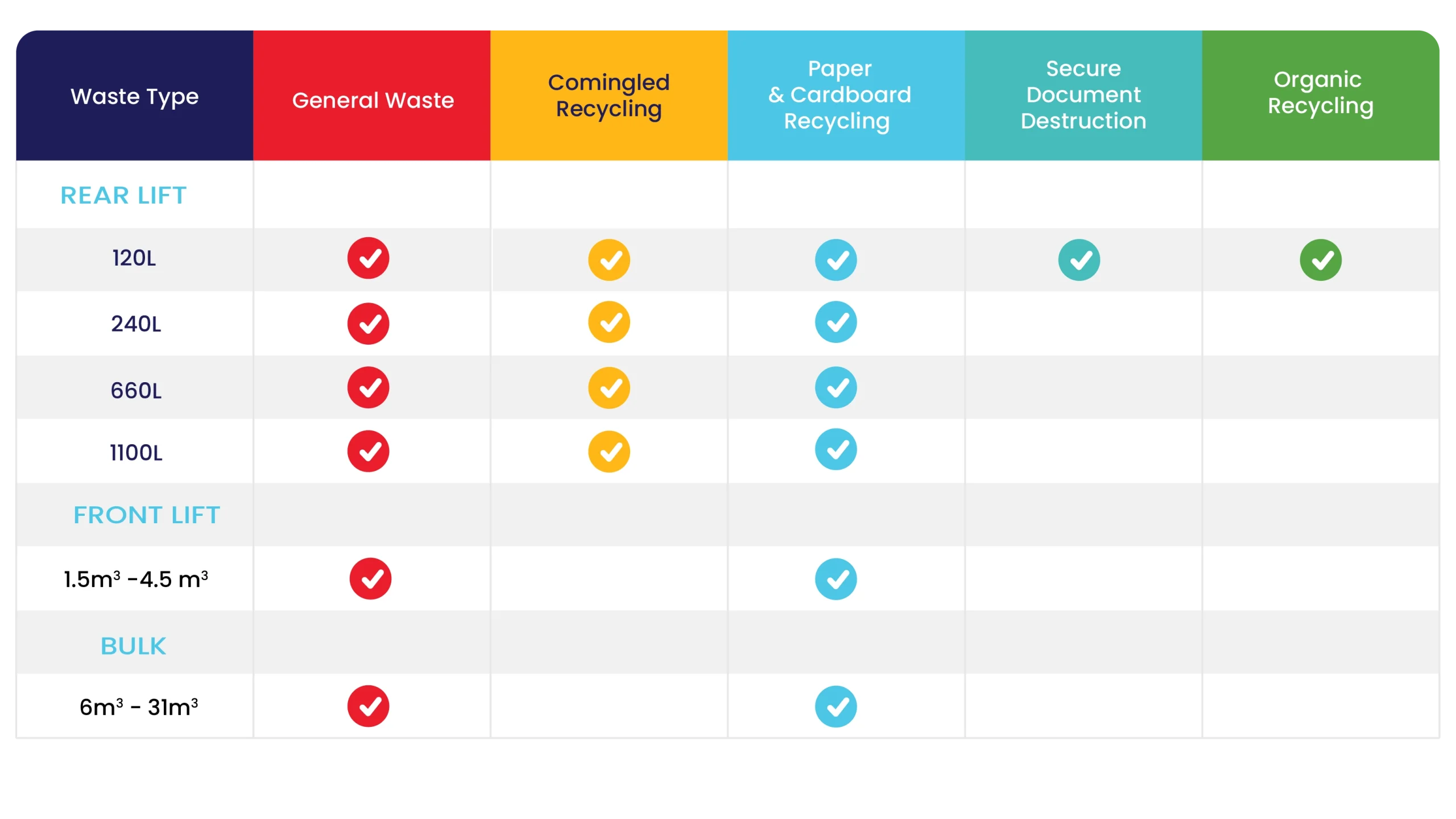
Premier Waste supplies a full range of general waste bins to suit businesses of all sizes, from small commercial sites to large industrial facilities. General waste is available in both rear-lift, front-lift and bulk hooklift bin formats, allowing you to choose the most efficient setup for your site. To accommodate different site layouts and volumes, we supply a full range of general waste bins:

  • 120L and 240L rear-lift bins for small commercial sites
  • 660L and 1100L rear-lift bins for higher daily waste volumes
  • 1.5m³, 3.0m³ and 4.5m³ front-lift bins for large commercial and industrial operations
  • 6m³ to 31m³ bulk hooklift bins for high-volume general waste and large clean-ups

Our team will recommend the most efficient bin combination based on your site conditions, waste output and service frequency.

Premier Waste general waste collection bin for mixed business waste

General Waste

Premier Waste collection trucks and bin types for commercial services
Premier Waste commingled recycling bin for mixed recyclable materials

Commingled Recycling

Premier Waste collection trucks and bin types for commercial services
Premier Waste paper recycling bin for paper and cardboard materials

Paper Recycling

Premier Waste collection trucks and bin types for commercial services
Premier Waste secure document destruction service for confidential paper waste

Secure Document Destruction

Premier Waste collection trucks and bin types for commercial services
Premier Waste organic recycling bin for food scraps and green waste

Organic Recycling

Premier Waste collection trucks and bin types for commercial services

Why Effective General Waste Management Matters

When general waste is not managed properly, businesses can experience:

Bad smells caused by unmanaged general wasteUnpleasant odours from poorly managed general waste

Unpleasant odours

Pests attracted to poorly stored general wastePest activity attracted by poor general waste management

Pest activity

Recyclables affected by contamination from general wasteContamination of recyclable materials from incorrect disposal of general waste

Contamination of recyclable materials

Safety hazards linked to poorly managed general wasteWorkplace health and safety risks caused by general waste issues

Workplace health and safety risks

Site access obstructed by overflowing waste binsOverflowing general waste bins blocking site access

Blocked access points or overflowing bins

Compliance penalties linked to incorrect general waste disposalFines resulting from improper general waste disposal and non-compliance

Fines for improper disposal

A structured general waste program prevents these issues while keeping your site clean and compliant.

What’s your biggest waste management problem right now?

We’re listening. Get in touch today and we can help you find a solution. One that’s cost-effective, efficient and suits your business today, tomorrow and as your needs change.

Safety and compliance focus for waste services by Premier Waste

General Waste Compliance and Environmental Responsibility

All general waste collected by Premier Waste is disposed of at licensed facilities that meet EPA, local council and industry environmental requirements. We follow strict handling and safety procedures to minimise risk, prevent contamination and maintain full regulatory compliance for your business.

If your organisation requires a customised general waste program, scheduled collection services or an assessment of your current waste setup, contact us today.

Frequently Asked Questions

General waste is everyday waste that cannot be reused or placed in an appropriate recycling or recovery stream. For businesses, it can include non-recyclable packaging, contaminated materials and other residual waste generated through normal commercial or industrial operations. 

Separating recyclable, organic, electronic and other recoverable materials from general waste can help reduce the amount of waste sent to landfill. 

General waste bins are generally used for non-recyclable and non-hazardous waste that cannot be placed in another appropriate recycling or recovery stream. Depending on the site and collection arrangement, this may include soft plastics, contaminated packaging, polystyrene, disposable hygiene products and other non-recyclable materials. 

Businesses should separate recyclable materials wherever appropriate rather than placing them in general waste.

Hazardous chemicals, oils, paints, batteries, e-waste, hot materials, medical or infectious waste and other regulated waste should not be placed in a standard general waste bin. 

Recyclable materials such as suitable paper, cardboard, containers and other recoverable materials should also be separated into the appropriate recycling stream where available.

The right bin size depends on how much waste your business generates, the type of waste, available space, site access and how frequently collections are required. 

Premier Waste offers general waste bins ranging from 120L and 240L rear-lift bins for smaller sites through to 660L and 1100L bins, larger front-lift bins and bulk hooklift bins for high-volume operations. The most efficient setup may combine bin capacity and collection frequency to match your site's actual waste volumes. 

General waste collection frequency should reflect the amount of waste generated, available bin capacity, site conditions and operational requirements. 

Premier Waste can arrange daily, weekly or fortnightly scheduled collections, with the collection program designed around the requirements of the individual site. 

General waste collected by Premier Waste is transported to licensed waste facilities for appropriate disposal. 

Keeping recyclable and recoverable materials out of the general waste stream where possible can reduce landfill disposal and improve overall waste and resource-recovery outcomes.

Commercial general waste collection costs depend on factors such as bin size, waste volume, collection frequency, site access and specific disposal requirements. 

Because these factors vary between businesses, Premier Waste can assess the site's waste requirements and recommend an appropriate collection program and bin configuration.

Yes. Premier Waste provides multi-site waste service coordination for organisations operating across multiple locations. 

A coordinated approach can help businesses manage collection schedules and waste services more consistently across their sites while reducing the administrative complexity of managing separate arrangements. 

Start by identifying materials in the general waste stream that could instead be reused, recycled or recovered. Common opportunities can include separating paper and cardboard, commingled recyclables, organics and e-waste into appropriate waste streams. 

Reviewing bin placement, signage, collection frequency and staff waste-separation practices can also help reduce contamination and unnecessary general waste. 

TOP