

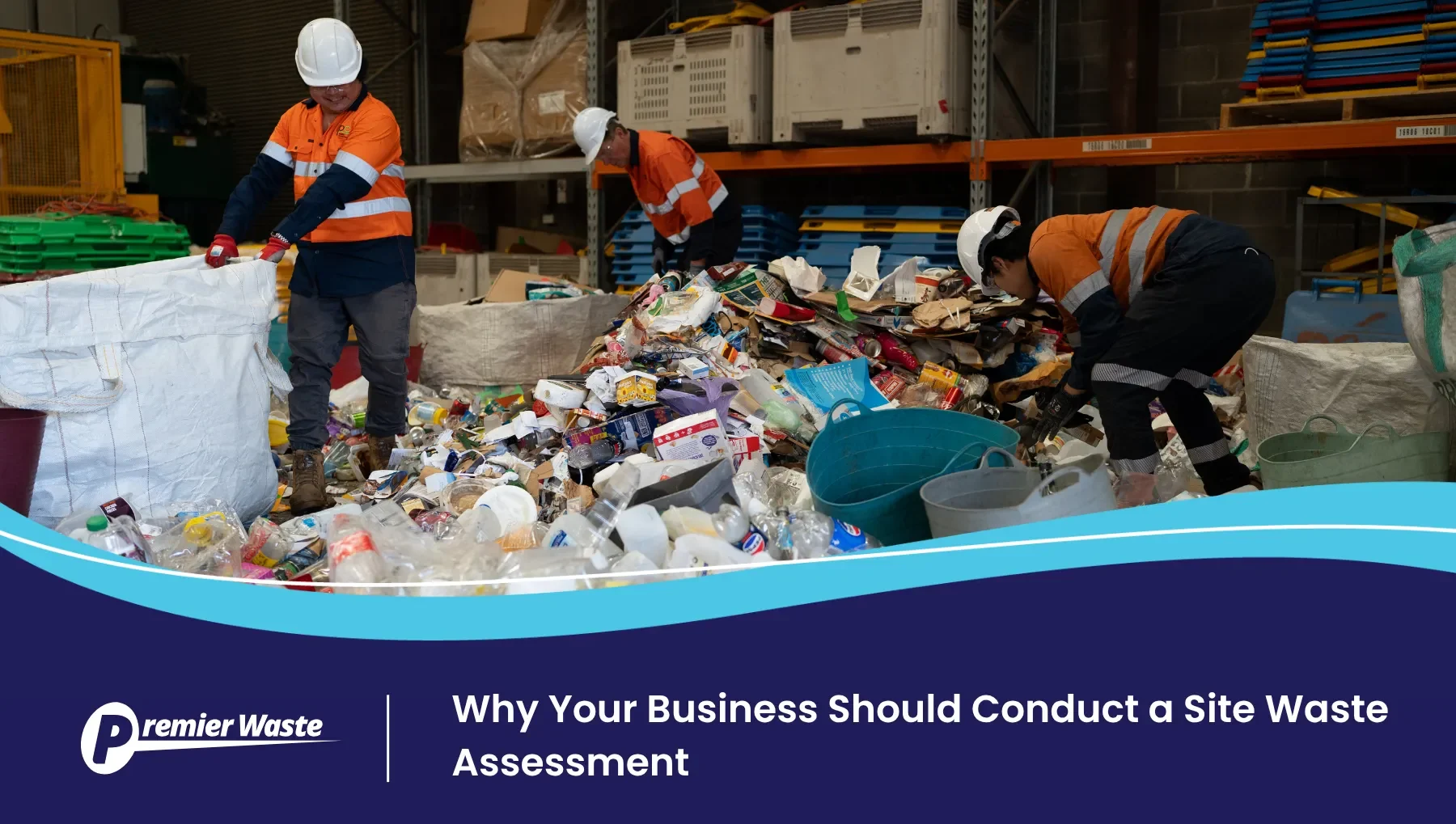

A site waste assessment helps a business understand whether its current waste setup still matches what the site actually generates and how it operates. It can identify where bin capacity, collection frequency, waste separation, placement, access or day-to-day practices are contributing to recurring problems or unnecessary service.
For many businesses, the value of an assessment is not simply knowing how much waste is generated. It is understanding why the current arrangement is performing the way it is and what practical changes could improve it.
A site waste assessment can be particularly useful when waste volumes, operating conditions or service requirements have changed, or when problems such as overflow, contamination, underused bins, additional collections or missed services keep recurring.
Understanding the Value of a Site Waste Assessment
Waste management decisions are closely connected. The amount and type of waste generated can influence which waste streams are needed, how much bin capacity is appropriate, how often collections are required and where bins need to be placed and serviced.
A site waste assessment provides a baseline for reviewing those factors together.
The Australian Government’s guidance on measuring and managing business waste recommends assessing the types, quantities and sources of waste a business generates. This helps identify where materials could be reduced, recovered or managed more effectively before changes are made to existing waste arrangements.
Without that baseline, it can be easy to respond to a visible symptom without understanding the underlying cause.
An overflowing general waste bin, for example, may indicate that more capacity is required. But it could also be caused by recyclable materials entering the wrong stream, a collection schedule that no longer reflects normal waste volumes or a change in operating activity.
The purpose of the assessment is to put those issues into context before changes are made.
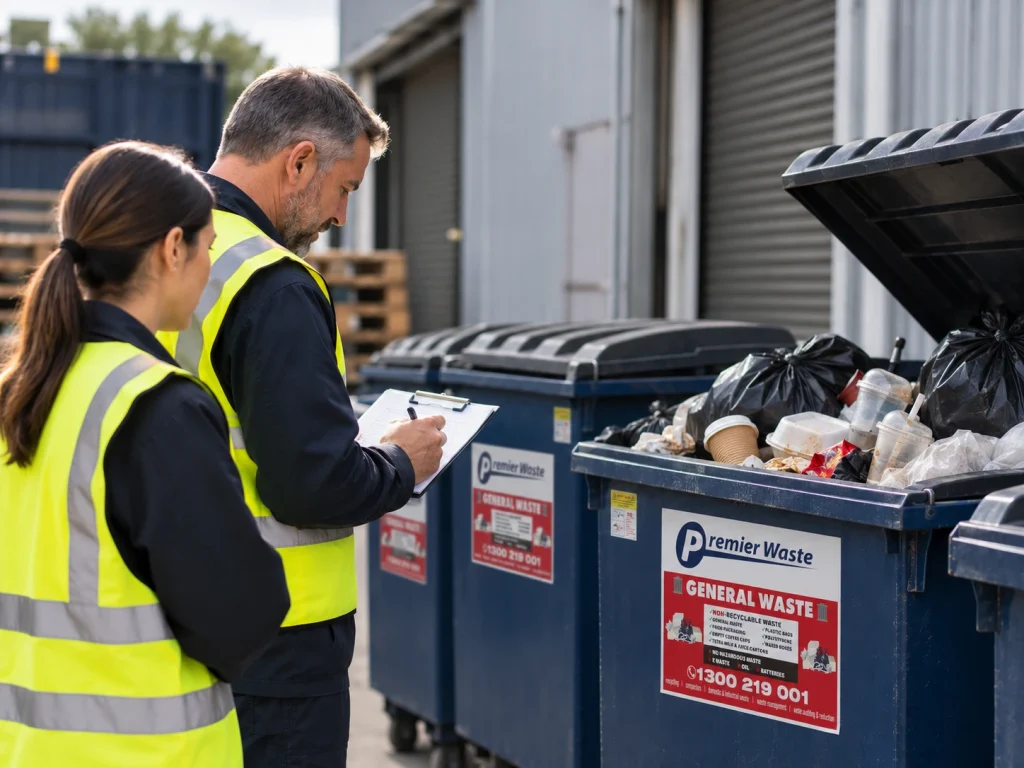
When Should a Business Consider a Site Waste Assessment?
A business does not need to wait for a major service problem before reviewing its waste setup. An assessment can be useful whenever there are signs that the current arrangement may no longer reflect normal site conditions.
Common triggers include:
- bins repeatedly overflowing before collection;
- bins regularly being collected with substantial unused capacity;
- frequent additional or unscheduled collections;
- recurring contamination in recycling or organics streams;
- recyclable materials regularly entering general waste;
- missed collections caused by access or presentation problems;
- waste areas becoming congested or difficult to manage;
- new waste types being generated;
- changes in production, staffing, occupancy, trading hours or site layout; and
- uncertainty about whether current waste services still provide the right capacity and collection frequency.
These signs do not automatically point to one solution.
Regular overflow, for example, does not always mean that a larger bin is required. The site may instead need a different collection frequency, better waste separation or a change to the way bins are positioned and used.
A site waste assessment helps establish what is causing the problem before the business changes its service arrangement.
What Can a Site Waste Assessment Reveal?
Whether Bin Capacity and Collection Frequency Still Match Waste Volumes
One of the most useful outcomes of a site waste assessment is a clearer picture of how available bin capacity compares with the amount of waste normally generated between collections.
One useful part of a site waste assessment is checking bin capacity, fullness and collection frequency across normal operating periods. Looking at those patterns over several collections can help distinguish a recurring problem from a one-off peak.
Consistently full bins may indicate that capacity or collection frequency needs to be reviewed. Consistently underused bins may point to excess capacity, unnecessary servicing or low participation in the intended waste stream.
Where capacity appears to be the issue, the assessment can help determine whether the next step is determining the right commercial waste bin size, changing collection frequency or reviewing another part of the setup.
Whether Waste Is Being Separated Effectively
A site waste assessment can also show whether materials are consistently reaching the appropriate waste stream.
Large amounts of cardboard or other recoverable material in general waste, for example, can make a general waste bin appear undersized even when the underlying problem is poor separation.
Contamination in recycling or organics bins may point to different issues. Staff may need clearer guidance, signage may not be easy to understand, or the relevant bin may not be conveniently positioned near the point where the waste is generated. Waste separation should therefore be considered alongside capacity and collection frequency rather than treated as a separate issue.
Changing the size or frequency of a service without understanding what is entering the bin may leave the original problem unresolved.
Whether Bin Placement and Collection Access Are Creating Problems
The location of bins can influence both how easily staff use them and how reliably they can be serviced.
Internal bin placement should make it practical for people to dispose of materials into the correct waste stream. Clear signage and staff education can support this by helping people identify the right bin and understand how materials should be separated at the point of disposal.
External waste areas need to work with normal site operations as well. Gates, loading activity, parked vehicles, deliveries, stored materials and pedestrian movements can all affect whether a collection vehicle can safely reach and service a bin.
If access problems occur repeatedly, the solution may involve changing a bin position, collection window or site procedure rather than changing the level of waste service provided.
Whether the Current Setup Still Reflects How the Business Operates
Waste requirements can change even when the existing service arrangement has remained the same.
Production may increase, staffing levels may change, operating hours may shift, a new tenant or department may be introduced, or the business may begin generating a different type of waste.
Over time, these changes can make an existing setup less effective even if it worked well when it was originally arranged. A site waste assessment provides an opportunity to compare the current arrangement with the way the site operates now.
What Should a Business Expect From a Site Waste Assessment?
The scope of an assessment should reflect the problem or question the business is trying to understand.
A practical site waste assessment may consider:
| Area reviewed | What it can help identify |
| Waste types and generation points | What materials are being produced and where they originate |
| Waste streams | Whether materials are being separated into appropriate collection, recycling or disposal pathways |
| Bins and capacity | Whether available capacity generally reflects normal waste volumes |
| Collection patterns | Whether service frequency matches how quickly each waste stream accumulates |
| Contamination | Whether incorrect materials are regularly entering recycling, organics or other streams |
| Placement and access | Whether bins are practical for staff to use and can be serviced reliably |
| Service records | Whether overflow, additional collections, missed services or other problems are recurring |
| Staff use and signage | Whether the available waste streams are clearly identified and being used as intended |
| Operational changes | Whether production, occupancy, trading patterns or site conditions have changed since the current arrangement was established |
Existing service information can also provide useful context. Depending on what is available, this may include current bin types and capacities, collection schedules, additional-service records, contamination notices, missed-service records or waste-weight information.
The on-site review can then provide the operational context behind that information.
The business should ultimately come away with a clearer understanding of:
- what is happening;
- whether the issue is recurring;
- what is likely causing it; and
- what practical changes may be worth considering.
That is more useful than simply recording the number of bins or how full they happened to be on one particular day.
What Happens After a Site Waste Assessment?
The value of a site waste assessment comes from turning its findings into practical improvements.
Depending on what the assessment identifies, recommendations may involve:
- increasing or reducing bin capacity;
- increasing or reducing collection frequency;
- introducing or changing a waste stream;
- relocating bins or waste stations;
- improving signage or bin identification;
- providing additional staff education;
- changing collection times or access arrangements; or
- monitoring an issue over a longer period before making a larger service change.
The same visible problem can lead to different recommendations at different sites.
Overflow may be addressed by a larger bin at one business, more frequent collection at another, or better separation of recoverable materials from general waste at a third.
This is why matching bin size with collection schedules should follow an understanding of the cause rather than come before it.
Where several changes need to work together, the findings can also guide the development of an internal waste management plan for the site rather than treating every recommendation as an isolated action.
Changes should then be reviewed against the issue they were intended to solve.
If the aim was to reduce overflow, for example, subsequent bin fullness and additional-service requests can help show whether the adjustment worked. If a new recycling stream was introduced, participation and contamination can be monitored to see whether the new arrangement is being used effectively.
Is a Site Waste Assessment the Same as a Waste Audit?
Not necessarily.
The term waste audit is used broadly across government and industry and can describe different levels of investigation. At one end, a business may carry out a practical operational assessment to establish a baseline, identify recurring problems and determine where changes may be useful.
At the other end, a more detailed waste-composition audit can involve physically sampling, sorting or weighing waste to determine the proportion of different materials present.
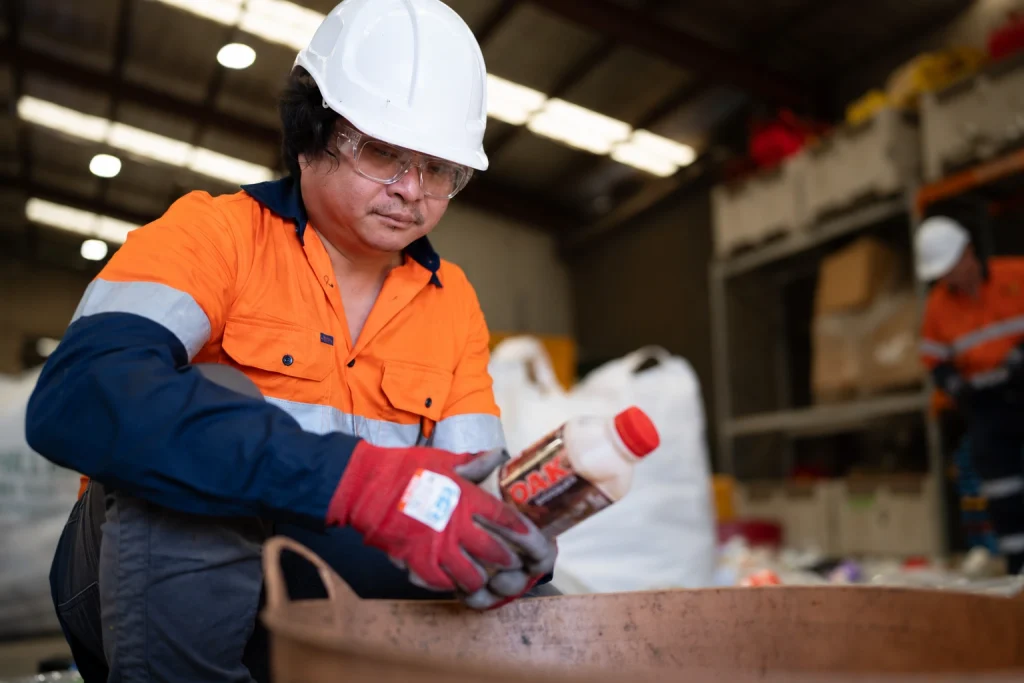
The NSW EPA’s 2023 commercial and industrial waste audit findings provide an example of this more detailed approach. The audit involved visual assessments of more than 1,500 waste loads and physical sampling of over 3,500 garbage bags to examine what businesses were sending to landfill. It found that 35% of the commercial and industrial waste examined was recyclable.
A site waste assessment focused on operational service performance is different. For many businesses, useful decisions can be made by reviewing waste streams, bin utilisation, collection records, contamination patterns, placement, access and normal operating conditions without manually sorting through every item in a bin.
A more detailed waste-composition audit may still be appropriate where reliable material-composition or weight data is specifically required. The level of assessment should match the question the business needs answered.
How Much Does a Site Waste Assessment Cost?
There is no single standard cost for a site waste assessment because the work involved can vary considerably.
Factors can include:
- the size and complexity of the site;
- the number of locations being reviewed;
- the number and type of waste streams;
- the quality of existing service information;
- whether repeated observations are required;
- the level of reporting or recommendations required; and
- whether the business needs an operational review or a more detailed waste-composition study.
A straightforward review of one site using existing service information is therefore different from an assessment involving multiple locations, numerous waste streams or detailed physical composition analysis.
Businesses comparing assessment proposals should understand what is actually included rather than comparing price alone. Some waste service providers, such as Premier Waste, include a site waste assessment at no additional cost as part of the pricing submission process. This helps ensure the proposed service reflects the site’s actual waste needs and operating conditions.
The appropriate scope is the one that provides enough information to answer the business’s operational question without adding measurement that is unlikely to change the decision.
How Does a Site Waste Assessment Support the Wider Waste Management Program?
An effective waste management program for business sites involves more than choosing bins and setting collection schedules. Waste streams, collection arrangements, site access and day-to-day practices need to work together to support reliable waste management.
A site waste assessment can support coordinating waste services and site requirements by showing whether waste streams, bins, collection schedules, placement, access and staff practices remain aligned with actual site requirements. It should not sit separately from the rest of the business’s waste management.
It can also provide a useful baseline for future review. If waste volumes, staffing, production or operating conditions later change, the business has a clearer reference point for identifying whether its waste setup still performs as intended.
This makes a site waste assessment useful not only when something has already gone wrong, but also when a business is reviewing service performance, planning operational changes or trying to prevent recurring inefficiencies from becoming part of normal operations.
Reviewing Waste Services Around How Your Business Actually Operates
A site waste assessment can give a business a clearer basis for deciding what, if anything, needs to change. Rather than responding to overflow, contamination, underused capacity or collection issues in isolation, the findings can help show how those problems relate to the site’s wider waste arrangements.
Premier Waste provides business waste services tailored to different site requirements, with service arrangements that can be adjusted according to the waste streams, volumes and operating conditions identified through a site assessment.
The findings may point to changes in bin capacity, collection frequency, waste separation, placement or another part of the current setup, while also confirming where existing arrangements are already working effectively.
Request a Waste Assessment to better understand how your current waste setup is performing and where practical improvements may be possible.


You must be logged in to post a comment.