


An internal business waste management plan can bring separate day-to-day waste decisions into one operating system: what waste streams are used, where materials go, which bins support them, when collections occur, who monitors the system and what happens when conditions change.
For commercial premises and industrial operations, the most useful plan is the one that reflects how waste actually moves through the site and gives the people using and managing the system enough information to keep it working consistently.
For day-to-day use, the plan should reflect the site’s actual waste profile and operating conditions rather than being copied from a generic template.
What Can an Internal Business Waste Management Plan Include?
A practical internal business waste management plan can bring together the decisions that affect how waste is handled day to day.
Common information to record includes:
- the waste streams generated at the site and what belongs in each;
- where waste is generated and first separated;
- internal bins and external collection containers;
- bin locations and how material moves between them;
- normal collection frequency, timing and collection points;
- site access requirements that affect servicing;
- roles for monitoring the system, reporting issues and coordinating changes;
- what happens when contamination, overflow or another problem occurs;
- any separate procedures that apply to specialist waste; and
- triggers for reviewing or changing the arrangement.
For day-to-day operations, the plan is most useful when it reflects the individual site rather than relying only on a company-wide waste policy. This allows the business to document how waste is generated, separated, stored and collected under normal operating conditions.
Formal waste management plans required for planning or development approvals, as well as plans involving regulated waste or technical design, may be subject to separate requirements. The City of Sydney’s waste management guidelines for new developments illustrate this distinction. These guidelines require a waste and recycling management plan for relevant new and change-of-use developments, rather than the type of internal plan used for everyday business waste management.
Start With the Site Assessment, Not the Template
Writing the document should not be the first step.
A useful plan begins with an understanding of what the site generates, where that waste comes from, how volumes change and where the current arrangement is not working. The plan then converts those findings into operating decisions.
The assessment identifies what is happening. The plan records how the business will manage it.
If a warehouse assessment shows that cardboard rises sharply after major deliveries, the plan does not need to reproduce every observation. It needs to record where that cardboard should be separated, where the relevant container is located, how it reaches the collection point, the normal collection arrangement, who monitors the area and what should trigger a review if delivery volumes change.
A hospitality venue may need the same planning process around food-related waste, while a manufacturing facility may need to account for production shifts, packaging or other materials generated through operations.
Business Queensland’s practical guidance for managing business waste provides a useful starting point for this process. It recommends recording bin sizes, estimated fullness and collection frequency to understand existing waste volumes. These observations provide a more reliable basis for deciding what the internal plan needs to record.
If those conditions are not yet understood, assessing current waste streams and service needs should come before finalising the plan.
Map Each Waste Stream From Generation to Collection
A common weakness in waste plans is that they describe external bins but not how material actually reaches them.
Instead, map each stream through the site. This means tracing the material from where it is generated, through the point where it is separated and moved around the site, to where it is stored and ultimately collected.
This reveals the hand-offs where the system can fail. An office may have recycling stations that feed larger external containers. A warehouse may move cardboard from receiving and dispatch areas to a central collection point. A manufacturing operation may have several production areas feeding one dedicated external stream.
For each waste stream, useful operational questions include:
- Where is the material generated?
- Where should it be separated?
- Where is it stored between collection cycles?
- Who or what process moves it to the external collection area?
- How is it collected from the site?
This is more useful than simply listing waste streams because it describes how the system is supposed to work.
Record the Bin and Collection Arrangement Together
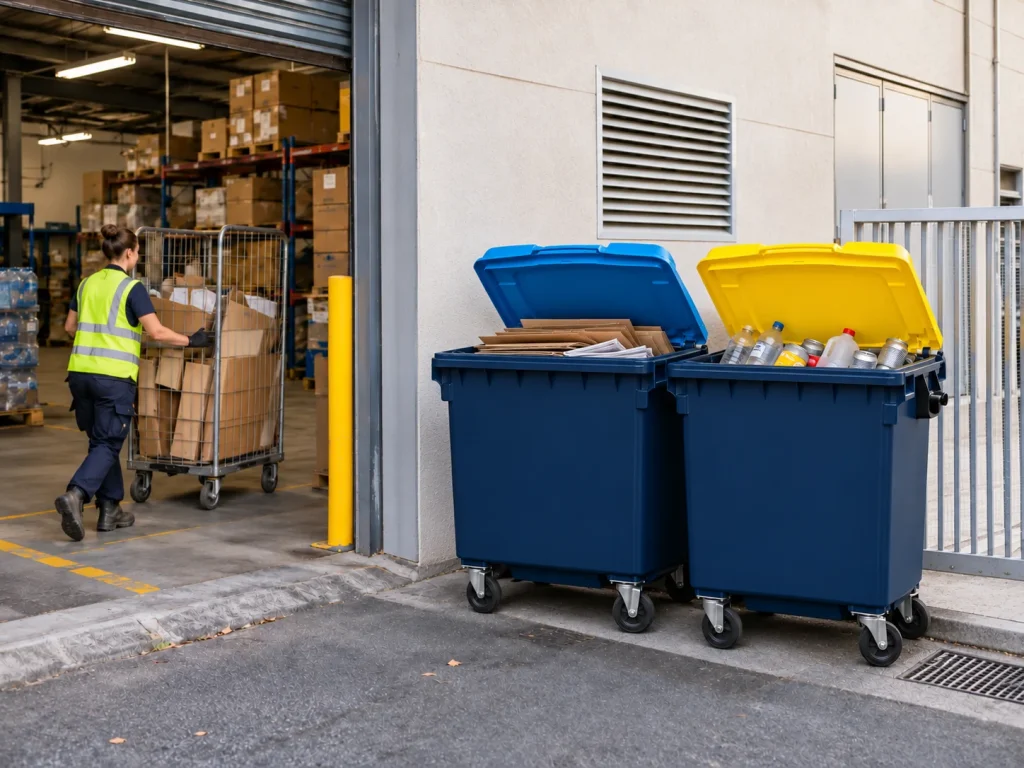
Once the material flow is understood, record the physical and servicing arrangement that supports each stream.
Useful information includes:
- container type or capacity;
- internal and external bin locations;
- normal collection frequency;
- relevant service days or service windows;
- collection point;
- access requirements; and
- predictable operating periods that may require a temporary adjustment.
The goal is to record the agreed arrangement, not reopen every bin or frequency decision inside the plan.
If capacity has not yet been established, choosing commercial bin sizes based on waste volumes is a useful starting point. If the servicing interval remains unclear, deciding how often commercial waste needs collection requires looking at how quickly each waste stream accumulates between services.
Assign Monitoring and Coordination Roles
A waste system becomes difficult to maintain when nobody knows who should monitor it or what should happen when a problem is identified.
Rather than assigning one person responsibility for an entire waste stream, an internal plan can identify the roles involved in monitoring, reporting, reviewing and coordinating changes.
Depending on the site, these may include:
- facilities or property management;
- site or operations management;
- warehouse or production supervisors;
- cleaning teams;
- HSEQ or another specialist function where relevant; and
- employees using the waste stations.
These roles do not all perform the same function.
The person who checks a waste area for overflow or contamination may not be the person authorised to change a collection arrangement. Employees using the bins also play a different role: they need to follow the site’s separation system and report problems where required.
A useful plan should distinguish between the different roles involved:
- Monitoring: who checks the waste system and identifies recurring issues;
- Reporting: who should be notified when a problem is found;
- Reviewing: who determines whether the issue requires further action; and
- Coordinating changes: who has authority to arrange or approve an adjustment to the system.
Define What Happens When the Normal System Stops Working
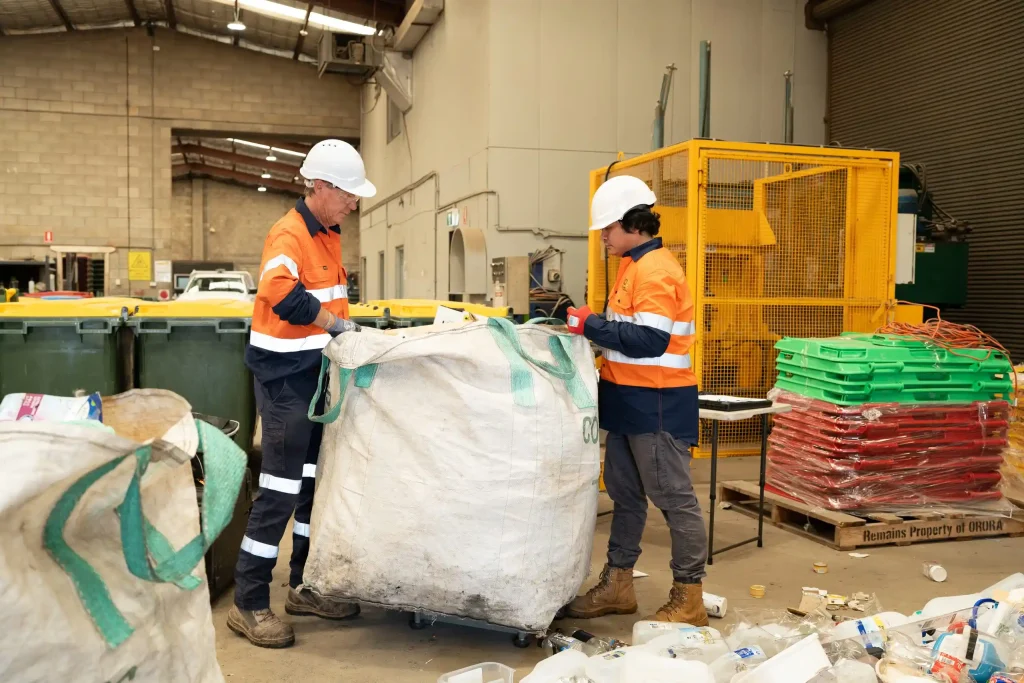
An internal operational plan can also reduce uncertainty when the normal arrangement stops working.
Useful exception triggers include:
- recurring overflow;
- repeated contamination;
- a new material entering the waste stream;
- damaged or unavailable containers;
- a collection not being completed;
- changed access to the collection area;
- an unusual increase in waste; or
- a sustained change in trading, occupancy, deliveries or production.
The plan does not need to provide a technical solution for every scenario. Instead, it can record what should be reported, which role reviews the issue and what type of decision may need to follow.
If a scheduled service repeatedly fails, the plan can direct the relevant role to investigate why commercial waste collections are missed rather than allowing repeated workarounds to become normal practice.
Keep Specialist Waste Requirements Separate Where Necessary
Not every waste stream should be managed through the same generic instructions.
This is particularly relevant to workshops, manufacturing operations and other sites that may generate specialist, regulated or higher-risk materials.
The main plan can identify:
- the specialist stream;
- where it is generated and stored;
- which role monitors or coordinates that part of the system; and
- the separate procedure or requirement that applies.
Detailed classification, tracking, handling or disposal instructions can then remain in the appropriate specialist procedure rather than making the everyday waste plan unnecessarily complex.
A generic operational waste management plan template should not be treated as evidence of regulatory compliance. EPA Victoria’s industrial waste obligations and duties guidance explains how requirements differ for industrial, priority and reportable priority waste, including classification, transport and lawful disposal. These requirements may need to be addressed through separate specialist procedures rather than relying solely on the site’s everyday waste management plan.
Use a Waste Management Plan Template for Internal Operational Planning
For internal operational planning, a waste management plan template can provide a consistent structure for recording agreed arrangements. It should not determine the site’s waste setup or be treated as a statutory or compliance template.
A practical template normally includes:
- site name and address;
- plan coordinator;
- prepared or reviewed date;
- version;
- waste streams and material rules;
- containers and locations;
- collection arrangements;
- monitoring or coordination roles; and
- review triggers.
Example Structure for an Internal Business Waste Management Plan
The following is an illustrative structure for an internal operational plan rather than a formal or statutory waste management plan template.
| Waste stream | Where it comes from / material rule | Bin and location | Collection arrangement | Monitoring / coordinating role | Review trigger |
| General waste | Residual material remaining after relevant recoverable materials are separated | Internal collection points feeding the external general waste container | Record normal frequency, service window and collection point | Facilities or site management monitors capacity and recurring issues | Recurring overflow, persistent spare capacity or sustained volume change |
| Paper and cardboard | Offices, receiving, dispatch or packaging areas | Dedicated collection points feeding the appropriate external container | Record normal collection arrangement and predictable peak requirements | Facilities, warehouse or area supervisor monitors use and storage conditions | Delivery volumes change, contamination increases or storage becomes insufficient |
| Commingled recycling | Approved mixed recyclables from staff or operational areas | Clearly identified recycling stations feeding the external recycling container | Record normal frequency and collection point | Facilities, cleaners or site team monitors contamination and bin use | Recurring contamination or sustained change in recyclable volume |
| Specialist stream | Material produced through a maintenance, workshop or production activity | Dedicated storage identified in the relevant site procedure | Managed under the applicable specialist collection procedure | Operations, HSEQ or another nominated role coordinates the relevant procedure | New material, process change, storage issue or changed requirement |
The table can be expanded where additional information genuinely helps the site operate the system, such as accepted materials, signage requirements, service contacts or reporting fields.
The important point is that each row describes a working waste stream, not simply a bin.
Set Review Triggers Before the Plan Becomes Outdated
An internal operational plan should be reviewed when site operations change.
Useful review triggers include:
- introducing or removing a waste stream;
- changing business hours, shifts or occupancy;
- adding a production process;
- significant changes in deliveries or throughput;
- recurring contamination or overflow;
- substantial unused capacity;
- moving the waste-storage area;
- changing vehicle access or collection windows; or
- changing the collection arrangement.
A scheduled review is useful, but relying only on a calendar date can leave an obviously outdated system in place. A more practical approach is to combine scheduled reviews with event-based reviews when site conditions change.
The NSW EPA’s Bin Trim business waste improvement program follows a similar process by helping businesses assess their waste, identify improvements, prepare an action plan and track progress. This shows how regular assessment and monitoring can support better waste management decisions over time.
Where a review shows that the business is routinely paying for capacity or collections it no longer needs, reducing unnecessary business waste costs becomes the next consideration, provided any changes do not create overflow or operational problems.
Make the Plan Part of Day-to-Day Site Operations
An internal business waste management plan is most useful when people can actually use it in day-to-day operations.
A useful internal plan can make it easier to answer:
- Where does this material go?
- Which container supports that stream?
- When is it collected?
- Who monitors the waste area?
- Where should a problem be reported?
- Who reviews recurring issues?
- Who can coordinate or approve a service change?
- When should the plan itself be reviewed?
If those answers exist only in the memory of one employee, the business has a waste arrangement but not a reliable system.
The plan therefore plays an important role in managing a business waste program effectively, helping keep waste streams, bin arrangements, collection schedules, monitoring roles and review processes coordinated as site requirements change.
Premier Waste provides a free site assessment as part of preparing a quote. The assessment is used to understand the site’s waste profile, production or operating patterns and service requirements before the appropriate waste streams, bins and collection arrangements are determined.
This allows commercial and industrial waste collection services to be structured around how the site actually operates, rather than relying on a standard service configuration. Where several streams or collection methods need to work together, Premier’s broader business waste and recycling service options can support a coordinated site arrangement.
If your business needs help reviewing its current waste setup and coordinating a suitable service arrangement, contact Premier Waste for a free site assessment and tailored quote.



You must be logged in to post a comment.