



Business waste removal costs are best reduced by removing inefficiency from the service arrangement, not by cutting bins or collections until the site struggles. Across commercial premises and industrial operations, the safest savings usually come from identifying capacity that is consistently unused, correcting waste-stream problems, improving when services occur and reducing the need for reactive
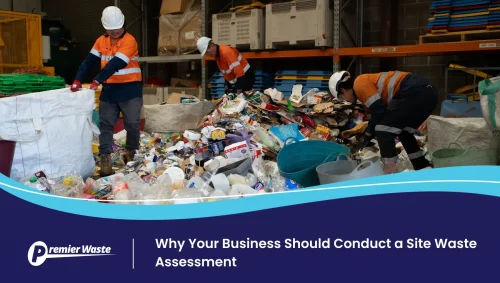
A site waste assessment helps a business understand whether its current waste setup still matches what the site actually generates and how it operates. It can identify where bin capacity, collection frequency, waste separation, placement, access or day-to-day practices are contributing to recurring problems or unnecessary service. For many businesses, the value of an assessment

The right commercial waste bin size should provide enough capacity for the waste your business normally generates between collections without regularly overflowing or leaving substantial unused space. Choosing that capacity involves more than comparing litres or cubic metres. Waste volume, waste type, collection frequency, available storage space and collection access all influence which bin arrangement

When a commercial waste bin regularly fills before collection, increasing bin size and increasing collection frequency can both create additional capacity, but they solve different problems. A larger bin increases the amount of waste the site can hold between collections. More frequent servicing makes the existing capacity available again sooner. The better choice therefore depends

An effective business waste management program matches the waste a site actually generates with the right waste streams, bin capacity, collection frequency, placement and access arrangements. It should make day-to-day waste removal reliable, prevent recurring problems such as overflow and contamination, and evolve with the business as its waste needs change. For commercial and industrial

An internal business waste management plan can bring separate day-to-day waste decisions into one operating system: what waste streams are used, where materials go, which bins support them, when collections occur, who monitors the system and what happens when conditions change. For commercial premises and industrial operations, the most useful plan is the one that

Commercial waste should be collected often enough that bins remain usable throughout normal operations without recurring overflow, hygiene problems or reactive collections. There is no single daily, weekly or fortnightly schedule that is right for every business. The appropriate commercial waste collection frequency depends on more than total weekly waste volume. It also depends on

Commercial waste collections can be missed when the scheduled service cannot be completed safely or the bin is not ready to be collected. Common site-related causes include blocked access, unavailable gates, overfilled or excessively heavy bins, unsuitable materials and changes to normal site conditions. However, a bin being left unemptied does not automatically mean the

