

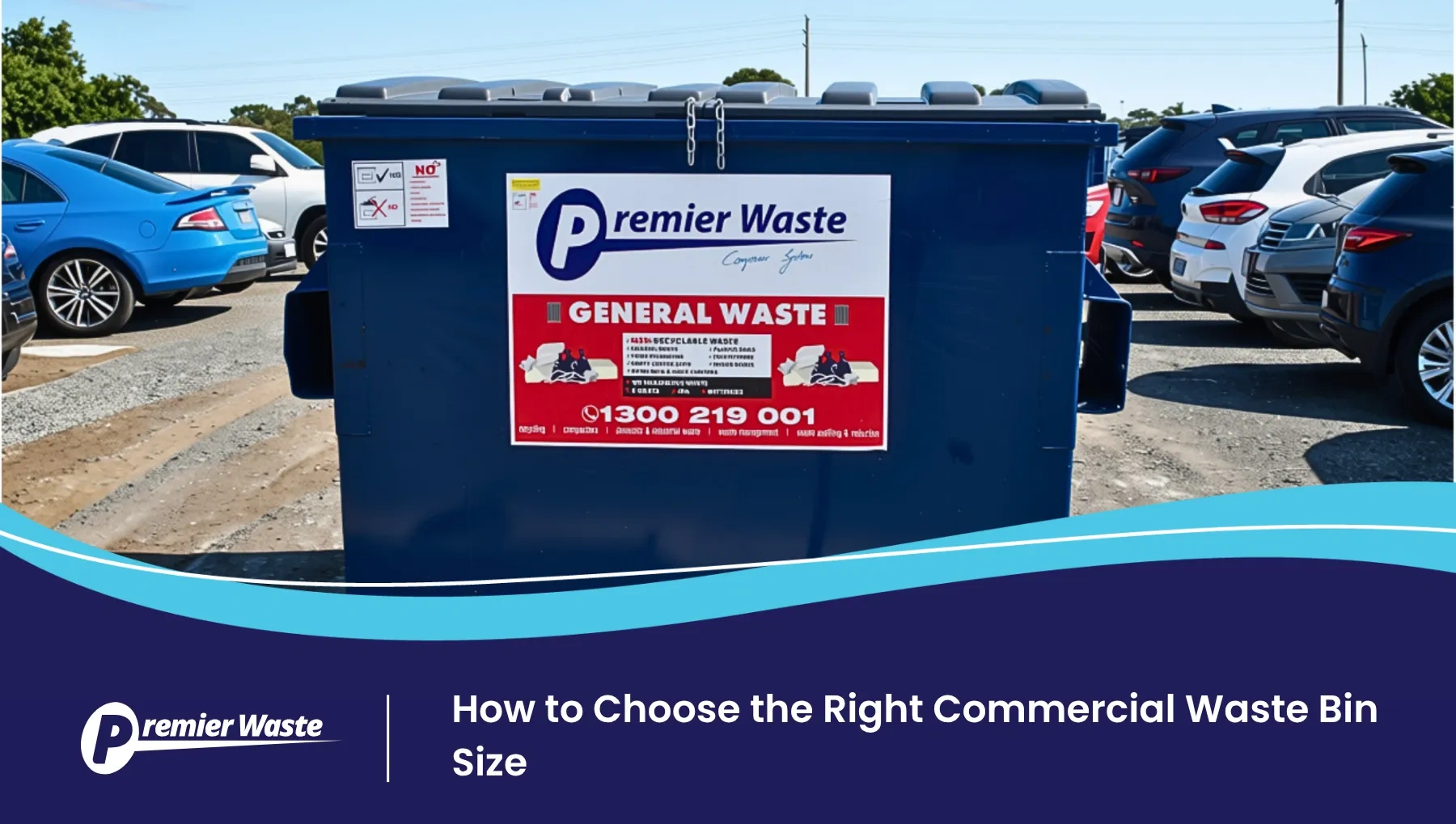

The right commercial waste bin size should provide enough capacity for the waste your business normally generates between collections without regularly overflowing or leaving substantial unused space.
Choosing that capacity involves more than comparing litres or cubic metres. Waste volume, waste type, collection frequency, available storage space and collection access all influence which bin arrangement is practical for a site.
The same considerations can apply across industrial sites such as warehouses, manufacturing facilities and workshops, although the waste volumes, material types and operating conditions may differ considerably between sites.
A larger bin is therefore not automatically a better option. For some businesses, changing collection frequency or improving waste separation may address a capacity problem more effectively than increasing bin size. The aim is to choose a bin that works with the way the business actually generates, stores and removes waste.
Choosing Commercial Waste Bin Capacity Around Your Site’s Needs
The most useful way to narrow down the options is to first establish what the bin needs to achieve between collections, then consider which available sizes can meet that need under the site’s physical and operational conditions. This gives the business a practical basis for comparing bin capacities rather than choosing by size alone.
What Size Commercial Waste Bin Does Your Business Need?
There is no single commercial waste bin size that is right for every business.
A suitable bin should generally provide enough capacity between normal collections while fitting within the available waste area and remaining practical for staff and collection vehicles to access.
The decision should consider:
- how much waste the business normally generates;
- how quickly the relevant waste stream accumulates;
- the type and characteristics of the material;
- how often the bin is collected;
- the space available to store and use the bin;
- collection vehicle access; and
- changes in waste volumes during busy periods or different operating conditions.
These factors are connected. A business that generates a relatively high volume of waste may not necessarily need the largest available bin if space is limited and more frequent collection provides the required capacity.
Conversely, a larger bin may be appropriate where waste accumulates steadily, sufficient storage space is available and the bin can be serviced reliably.
Choosing the right bin size is part of planning waste services around site requirements, as capacity needs to work alongside collection schedules, waste streams and other operational considerations.
How Much Waste Does Your Business Generate Between Collections?
The amount of waste that accumulates between normal collections is one of the strongest indicators of how much bin capacity a business needs.
A bin that regularly reaches capacity well before collection may be too small for normal waste volumes. A bin that is repeatedly collected with a large amount of unused space may indicate that the business has more capacity or servicing than it currently needs.
The important point is to look at what normally happens over several collections rather than judging the bin from one service day. Useful signs include:
- a bin that is normally close to full without overflowing may be appropriately sized;
- recurring overflow may indicate that capacity or another part of the service arrangement needs review;
- a bin repeatedly collected well below capacity may be larger than required or serviced more often than necessary; and
- if the bin is much fuller during some collections than others, the business may simply generate more waste during predictable busy periods.
Waste volumes can also change with trading periods, production schedules, deliveries, staffing levels, projects and seasonal activity. A retailer may generate more packaging during a major trading period, while a warehouse may experience higher volumes following large stock deliveries. Manufacturing sites may see similar changes as production levels rise and fall.
Where these peaks are predictable but temporary, adjusting the service during busier periods may make more sense than permanently moving to a larger bin.

The goal is not to measure every litre precisely. It is to understand whether the current capacity generally reflects normal business activity.
Recurring bin fill patterns can help show whether existing capacity reflects the amount of waste normally generated between collections.
How Does Waste Type Affect the Bin You Need?
Bin capacity is only one part of choosing an appropriate commercial waste bin. The material going into the bin affects how quickly the available space is used, how heavy the load becomes and which collection method is practical.
Two businesses can generate a similar volume of waste but need different bin arrangements because the material itself is different.
Light, Bulky and Heavy Materials Need Different Approaches
Lightweight materials can occupy a large amount of bin space without creating a particularly heavy load. Cardboard cartons, plastic packaging and other lightweight packaging materials are common examples.
Warehouses, distribution centres and retail businesses can generate significant volumes of these materials through deliveries, unpacking and stock movement. A bin may therefore fill quickly even though the material itself is relatively light.
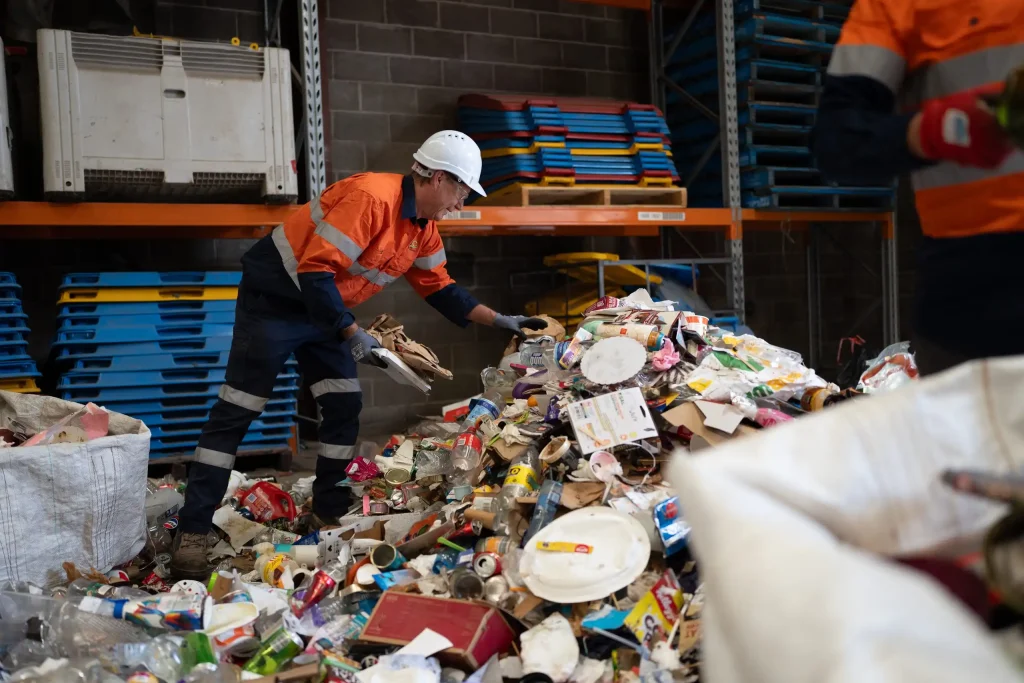
Where paper and cardboard account for a significant portion of that volume, bulk cardboard and paper recycling services may help reduce the amount of general waste capacity required.
On the other hand, manufacturing, workshop and other industrial sites can generate a different mix of materials, including timber, metal items, pallets, production offcuts or other heavier and irregular waste. These materials may require a different bin or collection method because of their weight, shape or size rather than simply needing more capacity.
This can be relevant to businesses such as:
- warehouses and distribution centres;
- manufacturing sites and workshops;
- retail premises undergoing refits;
- offices replacing furniture; and
- facilities teams managing commercial clean-outs.
The appropriate bin therefore depends not only on how much waste is being generated, but also on what the waste consists of.
When Bulky or Heavy Waste May Need a Different Bin Type
Some bulky, irregular or heavier materials may be better managed through a different collection format rather than a larger version of the site’s normal commercial bin.
Furniture, pallets, timber, metal items and commercial clean-out material can take up substantial space or be difficult to manage through standard mobile bins. In these situations, skip bin services for bulky and heavy commercial waste may provide a more appropriate collection option.
The key is to consider whether the problem is actually insufficient capacity or whether the material being generated is better suited to another container or collection method.
What Commercial Waste Bin Sizes Are Commonly Available?
Commercial waste bins can range from relatively small mobile bins through to much larger bulk containers. Some commonly encountered capacity ranges include:
- mobile commercial bins of around 140L to 360L, which can suit lower-volume sites or locations where storage space is limited; and
- larger bulk bins from around 660L up to 4.5m³, which can provide greater capacity for businesses generating larger waste volumes.
Commercial waste bins are available across a wide range of capacities, from smaller mobile bins through to larger bulk containers. As one example, Townsville City Council’s commercial wheelie and bulk bin options include 140L, 240L and 360L wheelie bins, as well as bulk bins ranging from 660L to 3m³. The council also provides larger containers for businesses generating substantial volumes of bulky waste, showing how different collection methods can accommodate different waste requirements.
The size labels alone do not determine which bin is appropriate. A smaller bin may be easier to store and move but require more frequent servicing as waste volumes increase. A larger container can reduce the number of bins or collections required, but it also occupies more space and may require a different collection vehicle or servicing arrangement.
Larger-capacity formats can be particularly relevant to warehouses, manufacturing facilities and other industrial operations where waste is generated consistently at higher volumes, but the same space, access and servicing considerations still apply.
Available capacities can vary between locations, waste streams and collection methods. Businesses should therefore check which bin sizes can actually be supplied and serviced in their local area and whether those options work with the physical conditions of their site.
Businesses reviewing their current bin capacity can explore general waste bin sizes and collection options to identify an arrangement that suits their waste volumes, available space and servicing requirements.
How Much Space and Collection Access Does the Bin Need?
A bin can provide the right volume and still be unsuitable for the site if it is difficult to store, use or collect.
Increasing capacity usually means increasing the physical footprint of the bin or moving to a different collection format. The practical space around the bin therefore matters as much as its nominal capacity.
Before moving to a larger bin, consider whether:
- the waste area has enough room for the bin without obstructing loading areas, pedestrian routes, parking or other normal operations;
- staff can reach and use the appropriate waste stream easily;
- the bin can be moved or presented as required for collection;
- the collection vehicle has enough clearance and manoeuvring space; and
- normal deliveries, parked vehicles, gates or pedestrian movements could interfere with servicing.
Where multiple waste streams are provided, clear signage and practical placement can support correct separation. A larger general waste bin may not improve the setup if recoverable materials are entering it because the appropriate recycling bin is difficult to access or use.
Industrial sites may have additional operational constraints around waste areas, including production traffic, forklifts, loading docks, stored materials or restricted access around working areas. These conditions should be considered before moving to a larger container.
Safe and reliable servicing depends on more than fitting the bin into the available waste area. Collection access and the way bins are presented for servicing also need to work under normal site conditions.
These considerations are also reflected in local government guidance on waste storage and collection. The City of Moreton Bay’s waste storage and collection policy covers general waste, commingled recycling and organics, including requirements for suitable storage areas, occupant access and safe collection arrangements. While the policy applies within the council’s jurisdiction, it highlights why access and collection arrangements should be considered when planning a waste area.
For a business choosing a waste bin, the practical question is whether the collection vehicle can safely approach, service and leave the bin under normal site conditions.
A larger bin that cannot be reliably serviced is not the right size for the site, even if its capacity appears suitable.
What Are the Signs Your Current Commercial Waste Bin Size Needs Review?
A single full or underused bin does not necessarily mean its size is wrong. Recurring patterns are more useful when deciding whether the current capacity still suits the business.
| What you are seeing | What it may indicate |
| Bin regularly overflowing before collection | More capacity may be needed, but collection frequency and waste separation should also be checked. |
| Bin regularly collected well below capacity | The bin may be larger than needed or serviced more often than necessary. |
| Bin only fills during predictable busy periods | A temporary service adjustment may be more practical than permanently increasing bin size. |
| Bulky materials fill the bin very quickly | A different bin type or waste stream may suit the material better. |
| Frequent additional collections are required | The current capacity or collection schedule may no longer match normal waste volumes. |
| A larger bin would obstruct storage or vehicle access | More frequent servicing or another bin configuration may be more practical. |
| Recoverable materials are filling general waste bins | Better separation may free up existing general waste capacity. |
The same visible problem can have more than one cause. Overflow, for example, could indicate a small bin, an unsuitable collection schedule or recoverable materials using capacity that would otherwise be available for general waste.
Where a capacity issue is recurring, reviewing bin size and collection frequency for commercial waste can help identify the more suitable adjustment. One option provides more storage between collections, while the other removes accumulated waste sooner.
A review may also be worthwhile after a lasting change in the business, such as increased production or occupancy, a new waste stream, changes to trading hours, a site expansion or relocation, or a change to the available waste storage or collection area.
These changes do not automatically mean the bin needs to be replaced. They are simply useful triggers for checking whether the arrangement that previously worked still reflects normal demand.
How Can a Site Waste Assessment Help Confirm the Right Bin Setup?
If it is still unclear whether the bin itself is the problem, conducting a business site waste assessment can help identify whether bin size, collection frequency or other site requirements need to change.
A site waste assessment can consider the type and amount of waste being generated, current bin utilisation, collection frequency, separation, placement and access together rather than treating the container in isolation.
That may confirm that a larger commercial waste bin is required. It may also show that the existing capacity is appropriate once another issue such as poor separation, collection timing or changing waste volumes is addressed.
Choosing Waste Services Around the Right Bin Configuration
Choosing the right commercial waste bin size is ultimately about matching capacity to the waste a business actually generates while accounting for waste type, collection frequency, available space and collection access.
The right outcome is not necessarily the largest bin available. It is the bin and service arrangement that provide enough capacity for normal operations without creating recurring overflow, substantial unused space or unnecessary site constraints.
Premier Waste offers a range of commercial and industrial waste services, with bin sizes and collection schedules tailored to each site’s waste volumes, operational requirements and access conditions.
Request a Waste Assessment to review your current bin setup and determine whether bin capacity, collection frequency or another part of the service arrangement may need to change.




You must be logged in to post a comment.