


An effective business waste management program matches the waste a site actually generates with the right waste streams, bin capacity, collection frequency, placement and access arrangements. It should make day-to-day waste removal reliable, prevent recurring problems such as overflow and contamination, and evolve with the business as its waste needs change.
For commercial and industrial sites, waste management works best when waste streams, bins, collection arrangements and site requirements are considered together rather than as separate decisions. What a business generates affects which waste streams are required; waste volumes influence bin capacity and collection frequency; site layout affects placement and truck access; and each of those decisions can influence service reliability and cost.
Effective waste management matters because poor alignment between these parts of the waste management program can lead to overflowing bins, unnecessary collections, contaminated recycling, blocked access and avoidable disposal costs.
A well-designed waste management program makes waste easier to manage consistently while supporting appropriate separation, safe site operations and compliant disposal.
How to Build an Effective Business Waste Management Program
Building an effective waste management program starts with understanding what the site generates, then matching its waste streams, bins, collection arrangements and site requirements to those needs.
What Does Effective Business Waste Management Involve?
At a practical level, business waste disposal generally involves six connected steps:
- identify the waste generated across the site;
- separate materials that require different recycling, treatment or disposal pathways;
- provide suitable bins or containers with enough capacity;
- store and present those bins where they can be used and collected safely;
- arrange collection at a frequency that matches the amount and type of waste being generated; and
- educate staff on their role in effective waste management, including correct waste separation and disposal.
After collection, the material is transported to an appropriate recycling, recovery, treatment or disposal facility according to the waste stream.
Waste removal therefore involves more than a truck emptying a bin. It includes the waste itself, the container, the collection area, the service schedule, vehicle access and where the material goes next.
Examples of effective waste management practices include:
- keeping appropriate recyclable materials separate from general waste;
- matching bin capacity to actual waste volumes;
- positioning bins where staff can easily use the correct stream;
- keeping collection areas accessible;
- monitoring contamination, overflow and unused capacity; and
- adjusting services when production, occupancy or operating conditions change.
The Australian Government’s national waste resource recovery statistics for 2024–2025 show that commercial and industrial waste accounted for 38% of all material recycled in Australia, equivalent to approximately 19.5 million tonnes. This highlights the substantial contribution business waste makes to national recycling activity. Effective waste separation and collection practices at commercial and industrial sites are therefore important for supporting material recovery.
Understand Your Current Waste Profile and Requirements
Before deciding on bin size, collection frequency or service arrangements, a business needs a clear picture of the waste being produced and how the current waste setup is performing.
Different areas of the same site can generate very different materials. An office may primarily produce general waste, paper and commingled recycling. A warehouse may also generate large volumes of cardboard, packaging and bulky materials, while manufacturing and specialist operational areas can introduce additional waste streams that require different handling or collection arrangements.
Materials that are not suitable for recycling may need general waste bin and collection services suited to the site’s daily requirements, while recoverable materials may be better managed through commercial recycling and material recovery services. The right setup depends on the type and amount of material being generated and whether particular waste streams require specialist handling.
A useful waste profile should answer four basic questions:
- What types of waste are being generated?
- Where on the site are they being generated?
- How much is produced, and when do volumes increase or decrease?
- Where are problems such as overflow, contamination or unused capacity occurring?
Waste volumes should be considered over time rather than judged by how full one bin happens to be on one particular day. Production runs, deliveries, trading peaks, project stages and seasonal activity can all change the amount of waste a site generates.
Understanding these patterns provides the foundation for decisions about waste streams, bins and collection schedules.
What Is a Site Waste Assessment and What Is Its Purpose?
A site waste assessment for businesses provides a useful starting point for reviewing waste streams and service performance, helping businesses identify whether bin capacity and collection arrangements still match their operations.
This can identify problems that are difficult to see from collection invoices or one-off observations alone. For example, a general waste bin may appear to require more frequent collection when a significant portion of its contents could instead be separated into a recycling stream. Conversely, a dedicated bin may be serviced more frequently than its actual usage requires.
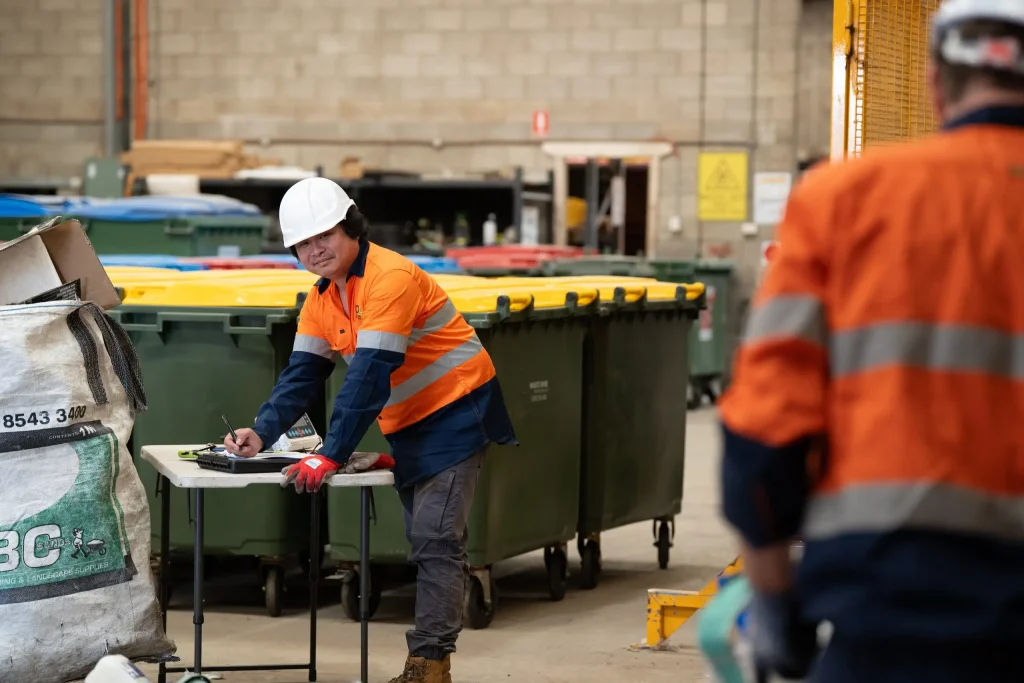
Depending on the site and the purpose of the assessment, this may involve reviewing current waste streams and service schedules, observing bin fullness, checking visible contamination, reviewing collection records or waste weights where available, identifying where waste is generated and speaking with the people responsible for day-to-day waste management.
A site waste assessment does not usually require manually sorting through every item in a bin. For many businesses, site observations, service data, bin utilisation and contamination patterns can already reveal whether the existing setup is working efficiently.
The assessment should also reflect representative operating conditions. Production peaks, seasonal activity, incomplete service data or inconsistent bin use can distort the findings if a single observation is treated as the complete picture.
Design the Right Waste Collection Setup
Once the waste profile is understood, the next step is to configure the bins, collection frequency, placement and access arrangements around the site’s actual requirements.
These decisions should be made together. A change to one part of the collection setup can affect another: a larger bin changes storage requirements, more frequent collections increase vehicle movements, and introducing a separate recycling stream can reduce the amount of general waste capacity required.
Match Commercial Waste Bins to the Waste Being Generated
A commercial waste bin is a container used to store waste generated by a business or other non-residential site for scheduled or on-demand collection. Commercial bins are available in different types and capacities to suit different waste streams, site layouts, volumes and collection methods.
Choosing the right bin means balancing four main factors:
- the type and amount of waste being generated;
- the space available for storing the bin;
- whether the collection vehicle can access it; and
- how frequently the bin will be serviced.
A bin that is too small can lead to overflow and additional collections. A bin that is consistently much larger than required can leave substantial unused capacity and contribute to an inefficient servicing arrangement.
Physical space matters as well. A bin needs to fit within the available waste-storage area without unnecessarily obstructing loading areas, vehicle movements, pedestrian access or normal site operations.
Businesses comparing capacities should focus on matching commercial waste bin size to site needs based on actual waste volumes and operating conditions rather than selecting capacity in isolation.
Should Your Business Change Bin Size Or Collection Frequency?
Bin capacity and collection frequency solve related but different problems.
A larger bin is more likely to be appropriate when waste volumes consistently exceed the available capacity and the site has enough space and collection access for a larger container.
More frequent collection may be more practical where storage space is limited, waste accumulates quickly or leaving material on site for longer creates operational problems.
Neither option will necessarily fix a problem caused by poor waste separation. For example, large amounts of cardboard in a general waste bin can create an apparent capacity problem that may be better addressed through separation than by increasing general waste capacity.
When capacity becomes a recurring issue, comparing bin size and collection frequency starts with understanding what is causing the problem. Waste separation, available space and collection schedules should be reviewed together.
How Often Should Commercial Waste Be Collected?
Commercial waste should be collected frequently enough to provide adequate capacity between services without creating persistent overflow, hygiene issues or unnecessary collections. There is no single collection frequency that is right for every site.
The appropriate schedule depends on how quickly each waste stream accumulates, the available bin capacity, operating patterns, storage limitations and the characteristics of the waste itself.
Signs that the current collection frequency may need review include:
- bins repeatedly filling before collection day;
- regular overflow or additional collection requests;
- bins consistently being serviced with substantial unused capacity; or
- changes in production, occupancy or trading activity that alter waste volumes.
These signs do not automatically mean collections should become more frequent. They may instead point to insufficient bin capacity, poor waste separation or a service configuration that no longer matches the site.
Determining how often commercial waste needs collecting requires looking at actual site conditions rather than defaulting to a standard weekly, fortnightly or other fixed servicing schedule.
Plan Bin Placement and Collection Access Together
A waste collection setup can be well designed and still perform poorly if bins are difficult for staff to use or difficult for collection vehicles to reach.
Internal bin placement should make it easy for people to dispose of materials into the correct waste stream. Clear signage and staff training can support this by helping people identify the right bin, understand what belongs in each stream and separate waste correctly at the point of disposal.
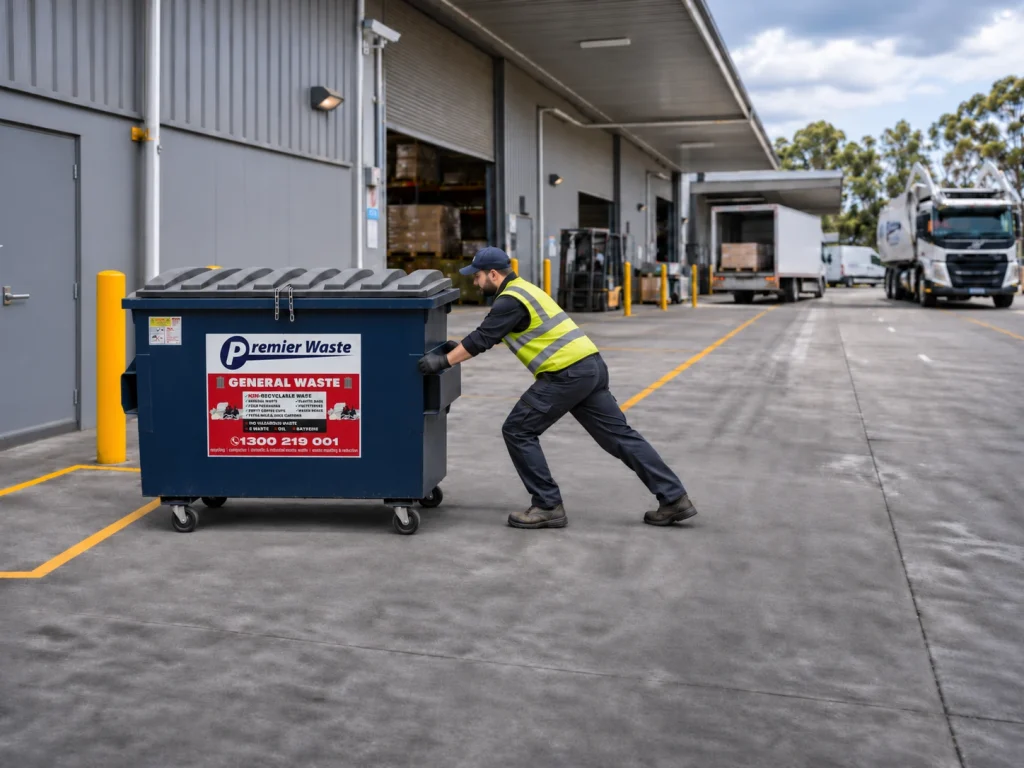
External bin placement should provide enough room for storage and servicing without unnecessarily interfering with normal site operations.
Collection vehicle access is also an important workplace safety consideration, particularly where waste areas are shared with pedestrians, forklifts or delivery vehicles. Workplace Health and Safety Queensland’s workplace vehicle and pedestrian safety guidance explains the risks associated with vehicles and mobile plant operating near people and identifies measures for managing those interactions. For waste collection areas, this reinforces the need to consider the full route a collection vehicle uses to approach, service and leave the bin under normal site conditions.
A recurring access issue should be treated as an operational issue. Moving a bin, changing a collection window or adjusting site procedures may be more effective than repeatedly responding to failed collections after they occur.
Make Waste Management Part of Day-to-Day Site Operations
A waste management program needs to work consistently after the bins and collection schedule have been established.
That means translating the service setup into practical responsibilities and procedures. Including which waste belongs in each stream, where bins are positioned, when collections occur, who monitors recurring problems and how changes are handled.
Without this operational layer, even a well-designed waste service can gradually become less effective as staff, production patterns and site conditions change.
Support the Program With an Internal Waste Management Plan
An internal waste management plan helps with organising site waste procedures and responsibilities, including bin arrangements, collection schedules, monitoring roles and review processes that support day-to-day operations.
Formal waste management plans required for planning or development approvals, as well as plans or procedures involving regulated waste or technical design, may be subject to separate requirements. Depending on the waste, activity and jurisdiction involved, these may need to be prepared or reviewed by a suitably qualified professional.
A practical internal plan can record:
- waste streams and accepted materials;
- bin types and locations;
- collection frequencies;
- service windows;
- vehicle access;
- monitoring and coordination roles for waste areas;
- contamination and overflow controls;
- specialist waste procedures; and
- triggers for reviewing the setup.
The value of an internal operational plan is in how it supports day-to-day decisions. It should help the business respond when waste volumes increase, site operations change or recurring service problems appear, not sit unused after the original setup.
An internal waste management plan can help a business document how its bin arrangements, collection schedules, monitoring and coordination roles, and review processes work together day to day.
Who Should Monitor Waste Separation and Disposal Within a Business?
Monitoring waste separation and disposal should sit with an appropriate person or team within the organisation. Depending on the business, this may involve facilities, operations, site management, property management or another nominated role. The purpose is to monitor how waste is being managed, identify recurring issues and help coordinate changes when the current setup no longer meets the site’s needs.
Employees also have a role in following site procedures and using the correct bins. Ongoing monitoring can help reinforce good waste practices and identify where additional guidance, education or changes to the waste setup may be needed.
For regulated or higher-risk wastes, legal obligations may also apply to the waste generator, transporter and receiving facility, and these vary by jurisdiction and waste type. Once responsibilities are clear internally, the next step is understanding which of these legal requirements apply to the waste the business generates.
What Waste Management Legislation Applies to Businesses in Australia?
There is no single waste-management rule that applies identically to every Australian business. Requirements depend on the state or territory, the type of waste generated and the activities involved in storing, transporting, treating or disposing of that waste.
For Premier Waste customers in Victoria and Queensland, the relevant state frameworks are particularly important.
In Victoria:
- Industrial waste is regulated through the Environment Protection Act 2017 and Environment Protection Regulations 2021;
- EPA Victoria states that industrial waste must be classified so the applicable duties and management requirements can be identified; and
- Victoria’s general environmental duty also requires businesses to eliminate or otherwise reduce risks of harm from waste or pollution so far as reasonably practicable.
In Queensland:
- Regulated waste is managed under the Environmental Protection Act 1994 and Environmental Protection Regulation 2019;
- Risk-based framework is used to classify regulated waste; and
- Certain regulated wastes in Queensland are also subject to waste-tracking obligations for waste handlers, including generators, transporters and receivers.
The practical requirement is to identify the waste correctly and check the rules that apply to that waste in the relevant jurisdiction. Specialist, regulated or higher-risk materials may have additional requirements for classification, storage, transport, records and lawful receiving facilities.
Manage Cost and Service Performance
An effective business waste management program should provide enough capacity and service reliability without creating unnecessary cost. Because these factors are connected, cost optimisation should focus on whether the overall service configuration still matches the site’s needs rather than simply reducing bins or collections.
How Can Businesses Reduce Waste Management Costs?
The most useful way to reduce business waste management costs is to remove inefficiency without creating new operational problems.
Costs can be influenced by the amount and type of waste generated, bin capacity, collection frequency, the number of services required, site access, contamination, disposal requirements and transport.
Business waste disposal costs and landfill levies can vary depending on the jurisdiction, waste type and disposal pathway, alongside other factors such as transport and processing requirements.
Cost optimisation should focus on the cause of inefficiency. A consistently underused bin may indicate excess capacity or unnecessary servicing, while persistent overflow may indicate insufficient capacity, unsuitable collection frequency or poor separation.
Simply reducing the number of collections can move the problem elsewhere. Fewer services may lower one cost while increasing overflow, internal handling or the need for additional unscheduled collections.
Identifying avoidable business waste collection costs requires looking at bin capacity, collection frequency and waste streams together, rather than reducing services without understanding the consequences.
The cheapest individual service does not necessarily create the most efficient overall service arrangement. The aim is to provide the required capacity and reliability without paying for unnecessary bins, collections or handling.
Why Do Commercial Waste Collections Get Missed?
Commercial waste collections may be unable to proceed when the bin or collection area is not ready or safely accessible at the scheduled service time. Common causes include:
- blocked vehicle access;
- overfilled or excessively heavy bins;
- unsafe bin presentation;
- contamination with unsuitable materials;
- gates or access points being unavailable; or
- changes to site conditions that prevent the vehicle from servicing the bin safely.
The useful question is not only why a particular collection was missed, but what in the current waste setup allowed the problem to occur.
A one-off obstruction may need a simple operational fix. Repeated access problems may require a different bin position or service window. Regular overflow may mean reviewing bin capacity, collection frequency or waste separation.
Understanding the causes of failed collections is important for preventing missed commercial waste pickups. Addressing access, bin presentation, capacity and timing issues early can help prevent these problems from becoming recurring disruptions.
Recurring collection problems are useful feedback, they can indicate that the waste management setup no longer matches how the site currently operates.
Review and Optimise the Program as the Business Changes
A business waste management program should be reviewed as waste volumes, staffing, production, site layout or operating patterns change. The aim is to identify when the existing setup no longer provides the right capacity, separation, access or service performance.
Optimisation does not necessarily mean increasing service. Depending on the cause, the business may need more capacity, fewer collections, a different waste stream, a new bin location or clearer site procedures.
When Should A Business Review Or Change Its Waste Management Setup?
A business should review its waste management setup when operating conditions, waste volumes or service performance indicate that the current configuration may no longer be suitable.
| What you are seeing | What may need to be reviewed |
| Bins regularly overflowing | Bin capacity, collection frequency, waste separation and whether the correct materials are entering the bin |
| Bins regularly collected well below capacity | Bin size or collection frequency, whether the intended waste stream is being used correctly by staff |
| Frequent additional collections | Whether normal bin capacity and scheduled collection frequency are sufficient for the site’s typical waste volumes |
| Recyclables filling general waste bins | Availability and placement of recycling bins, accepted waste streams, signage and staff education on correct waste separation |
| Recurring missed collections | Collection access, bin presentation, service timing, gate or site-access arrangements and bin condition |
| Waste areas becoming difficult to manage | Bin placement, available storage space, bin capacity and how waste is moved and handled within the site |
| Waste volumes changing with production or trading | Bin capacity, collection frequency and whether the current service arrangement still reflects normal operating volumes |
| New waste types being generated | Waste classification, appropriate separation and storage requirements, available collection services and any staff guidance required |
The appropriate response depends on the underlying cause. One business may need a larger bin serviced less often, while another may need a smaller physical footprint with more frequent collection. In some cases, introducing an additional recycling stream may solve a capacity problem more effectively than increasing general waste services.
Businesses should also review their waste arrangements periodically as part of normal operational management, rather than waiting for a major problem to occur. Routine observations such as bins filling faster than usual, congested waste areas or increasing additional services can indicate that the setup needs attention. Where the cause is unclear, a site waste assessment can provide a more detailed understanding of what needs to change.
A Practical Approach To Building And Optimising The Program
For most businesses, waste management is better treated as a continuous cycle than a one-time setup:
Understand what the site generates → assess volumes and patterns → separate appropriate waste streams → select suitable bins → set collection frequencies → plan placement and access → monitor performance → adjust when conditions change.
The individual decisions within that cycle are closely connected.
A site waste assessment may reveal that a separate recycling stream is needed. Removing that material from general waste can change the volume of general waste generated. Lower volumes can then affect the most appropriate bin capacity or collection frequency.
A new bin arrangement may affect storage requirements and collection access. A change in collection frequency may affect both cost and the amount of capacity available between services.
This is why business waste management should be managed as a connected program rather than as a collection of independent bins and services.
Building a Waste Management Program Around How the Site Actually Operates
Every business site has different waste streams, volumes, access conditions and operating requirements. As those conditions change, an existing waste setup may no longer provide the right capacity, collection frequency or service arrangement.
Premier Waste provides tailored business waste services across Melbourne and Brisbane, with service arrangements based on waste streams, bin configuration, collection frequency, placement and site access.
Request a Waste Assessment to review your current waste setup and identify opportunities to improve how waste is managed across your site.


You must be logged in to post a comment.